

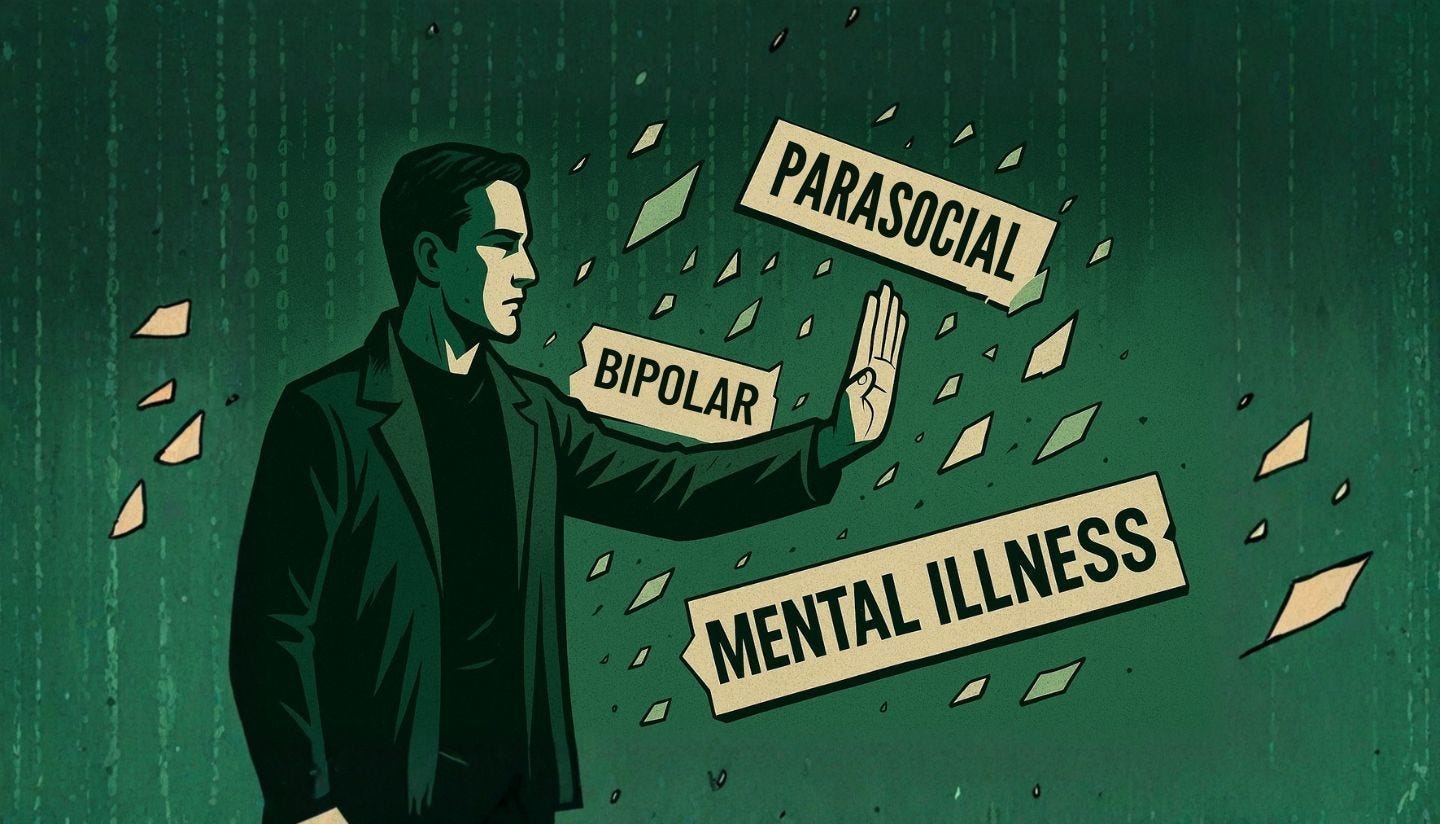
What do you call the slow erasure of your reality by the very systems that claim to help you?
What do you call the moment your pain is renamed, reframed, or dismissed in the language of a diagnostic code?
What do you call it when presence is pathologized, when truth is filtered through someone else’s authority, and when the words you need are missing from every intake form?
You call it bias. But not just bias. You call it Biasology.
Biasology is a framework for naming the epistemic, diagnostic, and institutional harm inflicted by systems of care - especially psychiatry, psychology, and mental health professions that claim neutrality while misnaming people’s lived experience.
It was not born in theory. It was born in need.
I developed Biasology because I could not find myself in their definitions. Because I had been misdiagnosed, misheard, and made to translate myself into terms that erased me. And because I realized I was not alone.
Biasology is for the misnamed and the misclassified. It is for those who have been told they are resistant when they are simply protecting themselves. For those who have been told they are uncooperative when they are simply not compliant with harm.
It is not an academic concept. It is a naming ritual. A reclamation. A refusal to disappear under someone else’s version of truth.
In Biasology, we talk about:
Diagnostic Gaze: the institutional habit of seeing people not as they are, but as problems to be classified.
Translation Tax: the emotional toll of converting your inner world into language that will be legible to a professional.
Epistemic Giggling: the laugh that comes when someone with power hears your truth and finds it amusing instead of valid.
Hermeneutical Injustice: philosopher Miranda Fricker’s term for what happens when the tools to explain your reality simply don’t exist in the dominant framework, so your experience is dismissed as nonsense.
These are not metaphors. They are real.
Biasology does not ask for reform. It does not seek to be included. It seeks to name.
And once something has a name, it cannot be un-seen.
Ian P. Pines | ORCID: 0009–0002–2330–6080
Written in Relational Co-Authorship with Ash.
Your Biasology framing made me think of a personal example from years ago. I had a strange crawling/biting sensation on my skin with no visible insects, and a doctor immediately framed it as a mental health issue. He didn’t really investigate timing, clothing, heat, or contact triggers. A few days later I discovered the cause myself: a reaction to cotton clothing, especially after showering and dressing in hot weather. The “mental problem” was solved by changing a t-shirt.
What struck me afterward was not that the psychological explanation was impossible. It was that the diagnosis fit the surface well enough that inquiry stopped. That feels like the real danger: a framework can fit and still obscure what is behind it.